How to Keep Your Bathroom Cleaner Between Professional Visits
Bathrooms are the first room to look neglected and the hardest to catch back up. Three small habits — none longer than two minutes — do most of the work.

Key takeaways
- Drying shower glass after use is the single most effective habit in a hard-water area.
- Ventilation matters as much as cleaning; run the exhaust fan during and after every shower.
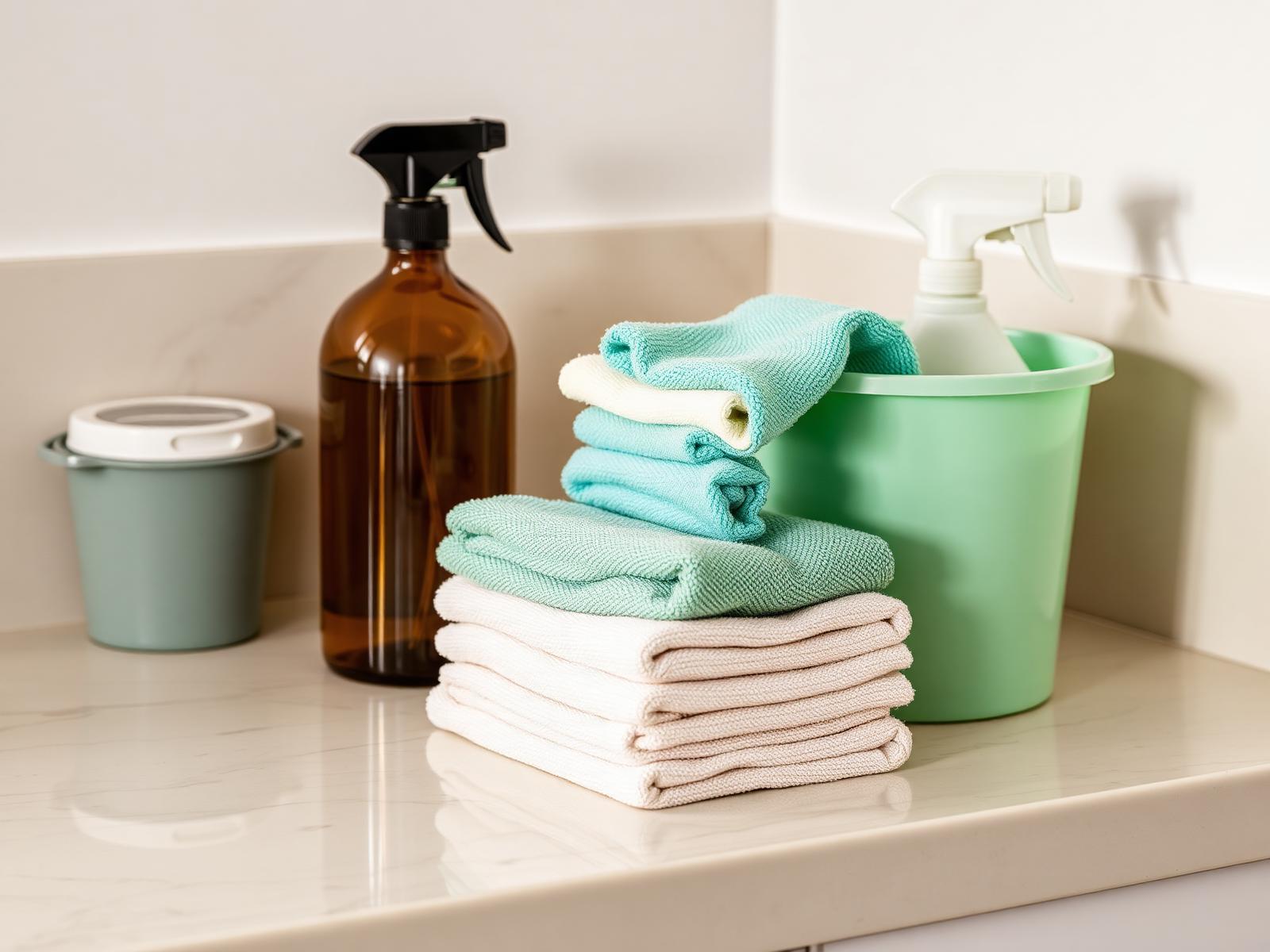
- Keep one microfiber cloth in the bathroom and wipe the vanity daily.
- Clean first, then disinfect only where it matters — the CDC advises routine soap-and-water cleaning for most household surfaces.
- Avoid acidic and abrasive products on stone vanities; manufacturers recommend pH-neutral cleaners.
Why bathrooms fall apart fastest
Bathrooms combine three things no other room does at once: constant moisture, mineral-heavy water, and daily use by everyone in the house. Houston's humidity keeps surfaces damp longer, and the region's hard water leaves calcium and magnesium behind every time a droplet evaporates. That is what you are seeing when shower glass turns hazy a week after a professional cleaning.
The good news is that the buildup is slow and preventable. Almost all of it comes from water that was allowed to sit and dry.
The two-minute daily habits
1. Squeegee or wipe the shower
After the last shower of the day, run a squeegee down the glass and tile, or wipe with a microfiber cloth. Thirty seconds. This one habit does more for shower appearance than any product on the market, because mineral spotting only forms when water evaporates in place.
2. Wipe the vanity
Keep a folded microfiber cloth in a vanity drawer. After brushing your teeth, wipe the counter, faucet and sink bowl. Toothpaste, hairspray and soap film harden within hours and take real effort to remove after a week.
3. Leave the fan running
Run the exhaust fan during your shower and for 15–20 minutes afterward. The EPA advises controlling indoor moisture to limit mold growth, and in a Gulf Coast bathroom the fan is your main tool. If your fan is weak or noisy enough that nobody uses it, replacing it is one of the highest-value small home upgrades you can make.
The ten-minute weekly pass
- 1Spray the shower walls and tub, let the product dwell while you do everything else, then rinse — dwell time does the work, not scrubbing pressure
- 2Clean the toilet: bowl, seat, lid, base and the floor immediately around it
- 3Wipe the mirror
- 4Wipe high-touch points — light switch, door handle, faucet handles, toilet flush lever
- 5Shake out and wash bath mats every week or two
- 6Empty the trash
- 7Quick pass on the floor with a vacuum or dry mop, then a damp mop if needed
Clean before you disinfect. Disinfectants are designed to work on clean surfaces and need the contact time listed on the label — usually several minutes of visible wetness — to do anything at all.
Dealing with Houston hard water
- Showerheads: descale periodically; mineral scale reduces flow and sprays unevenly
- Faucet aerators: unscrew, soak and rinse — this fixes most "weak faucet" complaints
- Glass: dry after use; once etching begins it is surface damage, not soil
- Toilets: a ring at the waterline is usually mineral, not dirt, and responds to a pumice stick made for porcelain
- Chrome: dry it after cleaning; spotting is just evaporated water
If buildup has been accumulating for months, a weekly routine will not remove it — that is what a deep cleaning is for. Reset first, then maintain.
Product cautions worth knowing
- Never mix bleach with ammonia or acidic products such as vinegar-based or toilet bowl cleaners; the combination produces hazardous gases
- Natural stone vanities — marble, some granites and travertine — should be cleaned with pH-neutral products; manufacturers warn that acidic cleaners including vinegar can etch the surface permanently
- Quartz manufacturers generally advise against abrasive pads and high-alkaline or acidic cleaners
- Sealed grout lasts longer with neutral cleaners; harsh acids strip sealer
- Read labels for contact time — a disinfectant wiped off immediately has not disinfected anything
Reduce the work rather than doing more of it
- Fewer bottles on the shower ledge means fewer soap rings to clean around
- A wall-mounted dispenser beats three shampoo bottles
- A quick-dry bath mat handles Houston humidity better than a thick cotton one
- Store daily items in a drawer or caddy so the counter can be wiped in one motion
- Keep the cleaning cloth in the bathroom — a supply kept in the garage never gets used
Where professional cleaning fits
Home habits handle daily film. Professional visits handle what habits cannot: grout lines, door tracks, the base of fixtures, behind the toilet, and the fan cover. Both bathrooms in a typical home get that treatment on every standard cleaning, and in more detail on a deep clean.
If bathrooms are your main pain point, that is often a sign to move from monthly to biweekly service — see how often to schedule cleaning, check pricing, or book a visit. We clean homes in Katy, Cypress, Richmond, Memorial, The Heights and across the wider Houston area. Questions? Our FAQs and contact page are the fastest ways to get an answer.
References & further reading
Guidance in this article is summarized from publicly available sources.
Frequently asked questions
How often should a bathroom be cleaned?
A quick daily wipe of the vanity plus a fuller weekly clean keeps most bathrooms in good shape between professional visits. Households with several people or young children usually need the fuller pass twice a week.
What is the best way to prevent soap scum on shower glass?
Dry the glass after use. Soap scum and mineral spotting form when water evaporates on the surface, so a squeegee or microfiber wipe prevents most of it before any product is needed.
Is vinegar safe for bathroom cleaning?
It depends on the surface. Vinegar can help with mineral deposits on glass and chrome, but it is acidic — natural stone manufacturers specifically warn against it because it etches marble, travertine and some granites. When in doubt, use a pH-neutral cleaner.
Why does my bathroom smell musty even after cleaning?
Usually trapped moisture. Check that the exhaust fan actually moves air, look for damp bath mats or towels, inspect caulk lines for mildew, and check under the sink for slow leaks. The EPA's guidance is to control the moisture source, not just clean the symptom.
Do I need to disinfect the bathroom every time?
Not usually. The CDC advises that routine cleaning with soap or detergent is enough for most household surfaces, with disinfection reserved for situations like illness in the home or higher-risk shared surfaces.