How Texas Dust, Pollen, and Allergens Affect Your Home—and What You Can Do About It
If you feel like you dust every week and it comes right back, you are not imagining it. Here is what is actually in Houston household dust, why our climate makes it worse, and which habits meaningfully reduce it.

Key takeaways
- Household dust is mostly skin cells, fabric fibers, soil tracked in from outside, and pollen — not one single thing.
- The EPA reports indoor air can contain higher levels of some pollutants than outdoor air, which makes source control the priority.
- Our long pollen season means outdoor allergens spend most of the year moving indoors.
- Filtration, entry habits and soft-surface laundering reduce dust more than dusting harder does.
- Damp or trapping methods work; dry feather dusters mostly relocate dust into the air.
What household dust in Houston actually is
Household dust is a mixture, and the mix shifts with the season and the household. In most homes it includes shed skin cells, textile fibers from clothing and upholstery, pet dander, soil and sand tracked in on shoes, cooking residue, and outdoor pollen that entered through doors, windows and on clothing.
In the Houston area, two local factors amplify it. First, our pollen calendar is unusually long — tree pollen typically starts in late winter, grasses run through spring and summer, and ragweed carries into fall. Second, sandy soils and constant construction across Katy, Fulshear and Cypress mean there is more fine particulate in the outdoor air to begin with.
Why it matters beyond appearance
The EPA's indoor air quality guidance notes that concentrations of some pollutants are often higher indoors than outdoors, and that Americans spend the large majority of their time inside. The agency's recommended approach is straightforward and worth repeating: control the source first, then ventilate, then filter.
For a home, that translates into a simple hierarchy. Keep dust and pollen from entering. Remove what enters rather than redistributing it. Filter what stays airborne. Cleaning is not a health treatment, but reducing settled dust is a reasonable way to reduce exposure to it — especially in households managing allergies or asthma.
Step one: keep it out
- Shoes off at the door. The most effective single change in a sandy, pollen-heavy region
- Two mats per entry — a coarse one outside, an absorbent one inside — and wash both regularly
- Keep windows closed on high-pollen days, however tempting a mild February afternoon is
- Change clothes after yard work and keep those clothes out of the bedroom
- Wipe pets down after time outside; dander plus carried pollen is a double load
- Rinse window screens in spring; they hold pollen and release it with every breeze
Step two: filtration and airflow
In a climate where the A/C runs most of the year, your HVAC system is also your whole-home air filter. Treat it that way.
- Check filters monthly during heavy pollen and cooling months; replace when visibly loaded
- Use the highest filter rating your system is designed to handle — check your equipment documentation, since an overly restrictive filter can reduce airflow
- Vacuum supply and return vent covers so filtered air is not blowing across settled dust
- Consider a portable HEPA air cleaner in the bedroom of anyone with allergies; the EPA has published guidance on selecting and using air cleaners
- Run bathroom and kitchen exhaust fans — moisture and cooking particles both contribute to indoor air load
Step three: remove dust instead of moving it
Technique matters more than frequency. Dry feather dusters lift dust into the air, where it settles again a few feet away. Professionals use methods that trap.
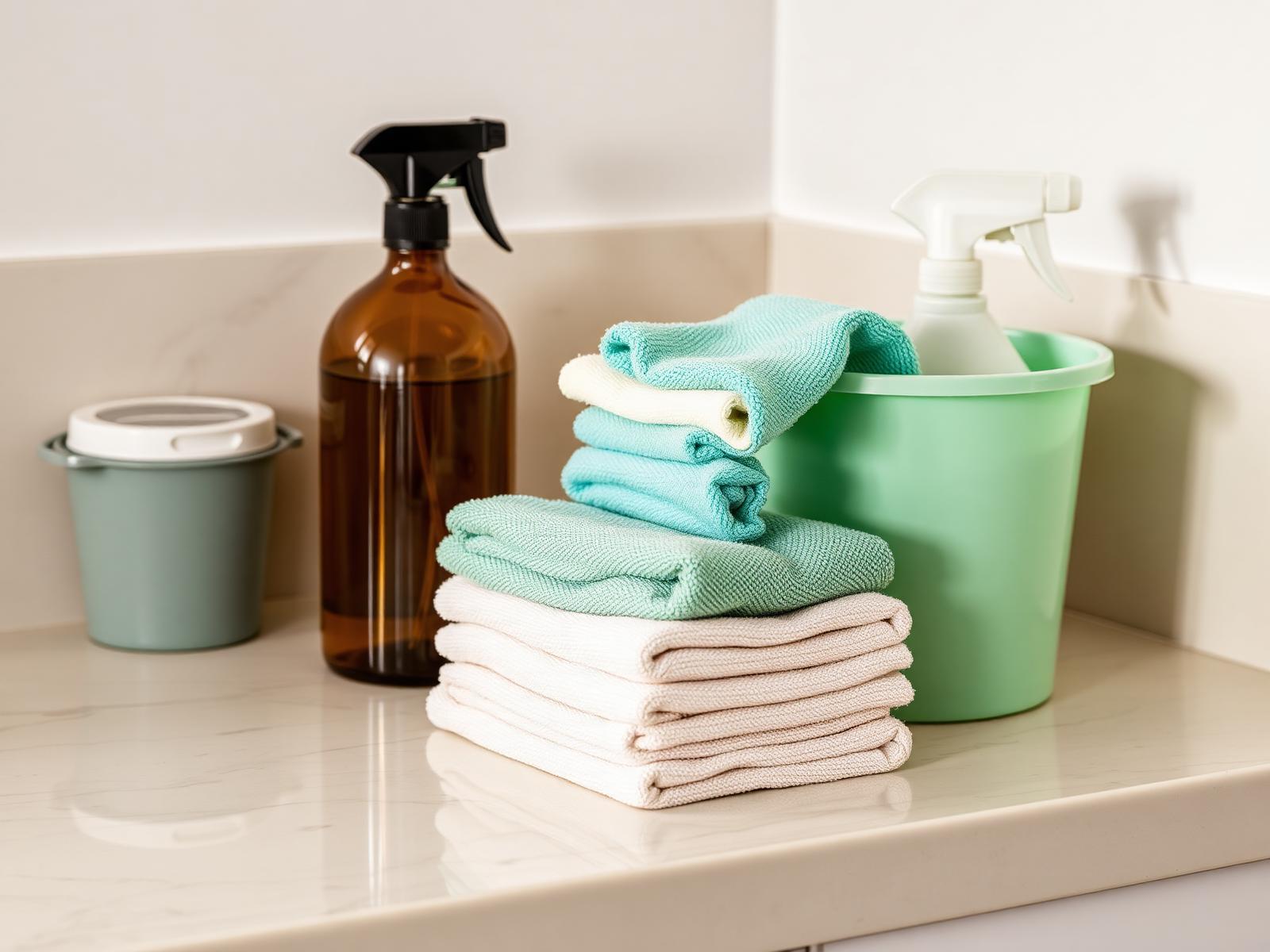
- Microfiber, slightly damp, folded into quarters so you always have a clean face
- Top to bottom, always — ceiling fans, then shelves, then furniture, then floors
- Vacuum with good filtration, ideally HEPA, and go slowly; speed is the most common vacuuming mistake
- Vacuum upholstery and mattresses, which hold far more than hard surfaces
- Wash bedding weekly in hot water — the standard recommendation for reducing dust mite allergen
- Launder curtains, throws and pet bedding seasonally
If you vacuum and then dust, you have redistributed dust onto a clean floor. Dust first, floors last.
Humidity: the local complication
The EPA recommends keeping indoor relative humidity generally between about 30 and 50 percent to limit mold and dust mite growth. On the Gulf Coast that takes active management — a cheap hygrometer tells you where you actually stand.
- Run the A/C rather than only opening windows in humid months; it dehumidifies as it cools
- Use exhaust fans during showers and cooking
- Address leaks and condensation promptly — the EPA is clear that moisture control is the key to mold control
- Consider a dehumidifier for consistently damp areas
- Do not let damp towels or bath mats sit; they raise local humidity every day
A Houston-area seasonal rhythm
- Late winter to spring: tree pollen peaks. Filters monthly, windows closed, soft furnishings laundered. See our spring cleaning checklist
- Summer: heavy A/C use, grass pollen, constant door traffic. Vents and filters stay the priority
- Fall: ragweed, plus the first cooler days when everyone opens windows. Dust returns quickly
- Winter: the mildest stretch — a good time for a detailed deep clean of vents, baseboards and soft surfaces
Where professional cleaning fits
Regular cleaning does not change the pollen count outside your door, but it does control how much of it accumulates and re-circulates inside. Consistent recurring cleaning keeps settled dust from ever reaching the level where it becomes visible on every surface, and a periodic deep clean resets the places dust hides: vent covers, baseboards, blinds, ceiling fan blades and floor edges.
For households with allergies, many homeowners find weekly or biweekly service noticeably easier to maintain than a monthly schedule — our guide on choosing a cleaning frequency walks through how to decide. You can see what a standard visit covers, review pricing, or book online in a couple of minutes.
We serve Katy, Cinco Ranch, Fulshear, Cypress, Bridgeland, Richmond, Tomball, Memorial and the Energy Corridor, The Heights and Downtown Houston. See all service areas or get in touch.
References & further reading
Guidance in this article is summarized from publicly available sources.
Frequently asked questions
Why does my house get dusty so fast in Houston?
A long pollen season, sandy soils, ongoing construction in many West Houston communities, and near-constant A/C circulation all contribute. Add normal indoor sources like skin cells and fabric fibers and dust rebuilds quickly.
Do air purifiers actually help with dust and pollen?
Portable HEPA air cleaners can reduce airborne particles in the room where they run, and the EPA has published guidance on choosing and using them. They work best alongside source control and good filtration, not instead of them.
How often should I change my air filter in Texas?
Check monthly. Manufacturers typically suggest every one to three months, but heavy cooling use, pets and pollen season shorten that. Replace it when it looks loaded rather than waiting for a date.
Does regular house cleaning help with allergies?
It can reduce indoor exposure to settled dust, pet dander and tracked-in pollen, particularly when paired with HEPA vacuuming and regular laundering of bedding. It is not a substitute for medical advice about allergy symptoms.
What indoor humidity should I aim for?
The EPA generally recommends keeping indoor relative humidity between about 30 and 50 percent to discourage mold and dust mites. A small hygrometer is an inexpensive way to know where your home actually sits.